SynGas Test: I tested it for 30 days — my fuel costs have really been halved.
Fuel prices are at a record high, experts are warning of further increases — and a small plug is supposed to solve the problem? As an automotive journalist with 18 years of experience, I tested it myself. With fuel receipts, on-board computer data, and a master mechanic as a witness.
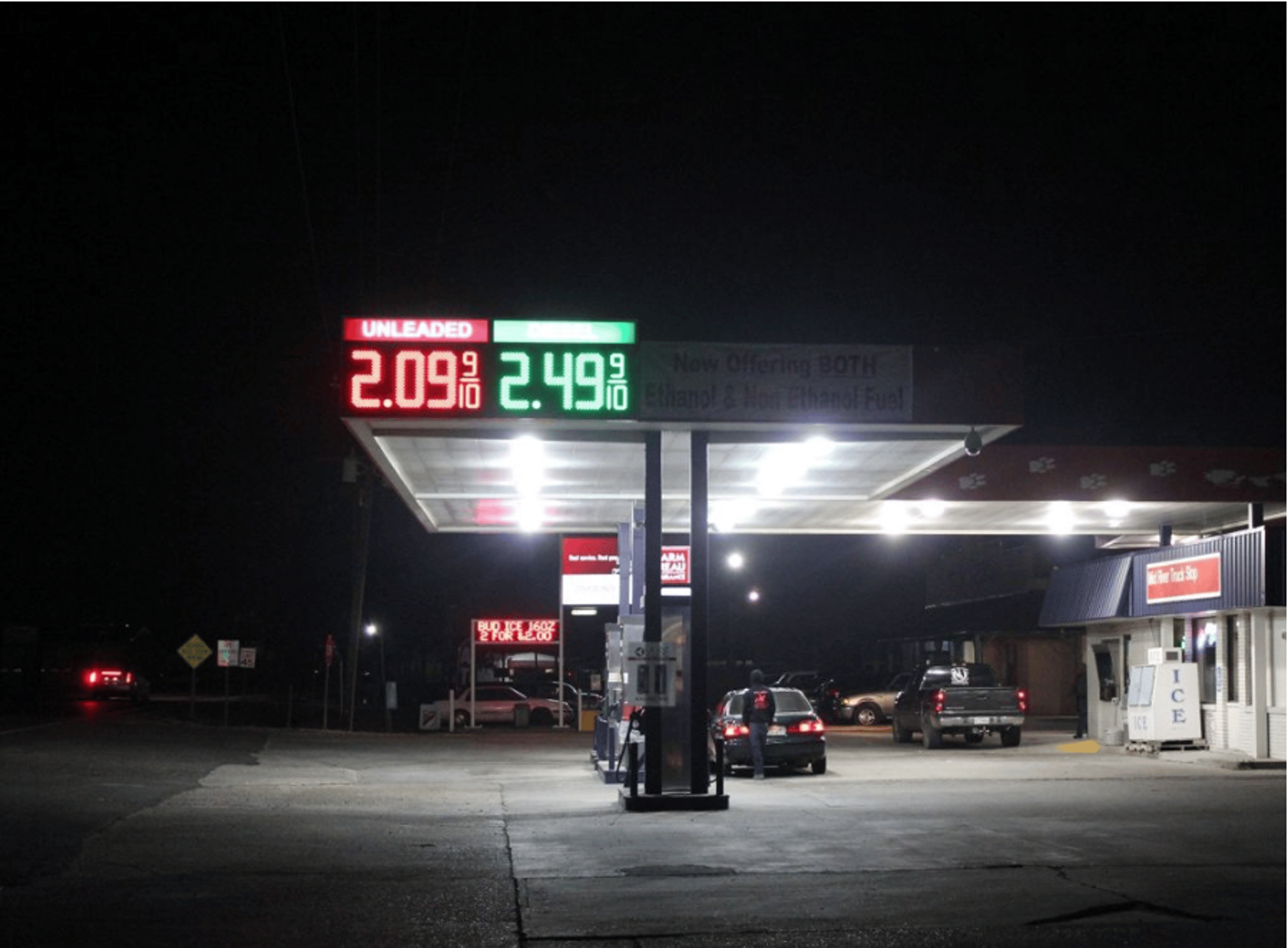
The biggest fuel problem in decades — and why this test was necessary
Those who fill up their cars today pay more than a year ago. More than five years ago. And according to all energy analysts' predictions, more than in ten years – assuming nothing changes.
| Current fuel consumption at American pumps | Forecast end of 2026 | Forecast 2027–2028 |
|---|---|---|
| Diesel: $4.29/gal Gasoline: $3.99/gal |
$4.75 – $5.25/gal (Analyst Forecast) |
$5.50 – $6.50/gal (High-Cost Scenario) |
The reasons for this are multifaceted — and none of them suggest a swift easing of the situation:
- OPEC Production Quotas Remain Low The oil cartel has repeatedly revised its production targets downward. Less supply with steady demand — that's not a prediction, it's basic market logic.
- Carbon Pricing Continues to Rise Taxes and fees already account for more than 60% of the price at the pump. Carbon pricing is set to increase to €65 per ton by 2027 — adding approximately 15 to 18 cents per liter in additional fuel costs.
- Geopolitical Uncertainty Every new escalation in oil-exporting regions can impact fuel prices within 48 hours, leading to higher costs at the pump.
- Global Demand Pressure While Europe is planning to phase out combustion engines, demand in Asia and South America is rising sharply. According to the IEA, global oil consumption reached an all-time high in 2025.
The Institute for Automotive Business (IfA) calculated in April 2026: A commuter with an 80 km daily commute could spend up to €4,800 per year on fuel alone by 2028 — assuming they do not change their driving habits.
In this context, this test took on a significance that goes far beyond a simple product review. The question was: Is there actually a simple, affordable solution — or are these all just empty promises?
How This Test Came About
It started when my colleague Klaus — also an editor, also a daily 70 km commuter — suddenly stopped complaining about fuel prices. I asked him why.
He showed me a small black device under his steering wheel. "Since I installed this, I refuel almost half as often." He let me look at his fuel receipts. The numbers matched.
As an automotive editor, I had two options: dismiss it as coincidence — or test it seriously. I ordered SynGas at my own expense and tested it systematically for 30 days in my own VW Golf 8 GTI — documented with fuel receipts and onboard computer data, verified by master mechanic Michael Brandt from Dortmund.
Editorial note: This report is based on a real 30-day field test. All consumption values were documented using a calibrated onboard computer and fuel receipts. SynGas was purchased at the author’s own expense. No manufacturer influenced the test results.
Test setup and methodology
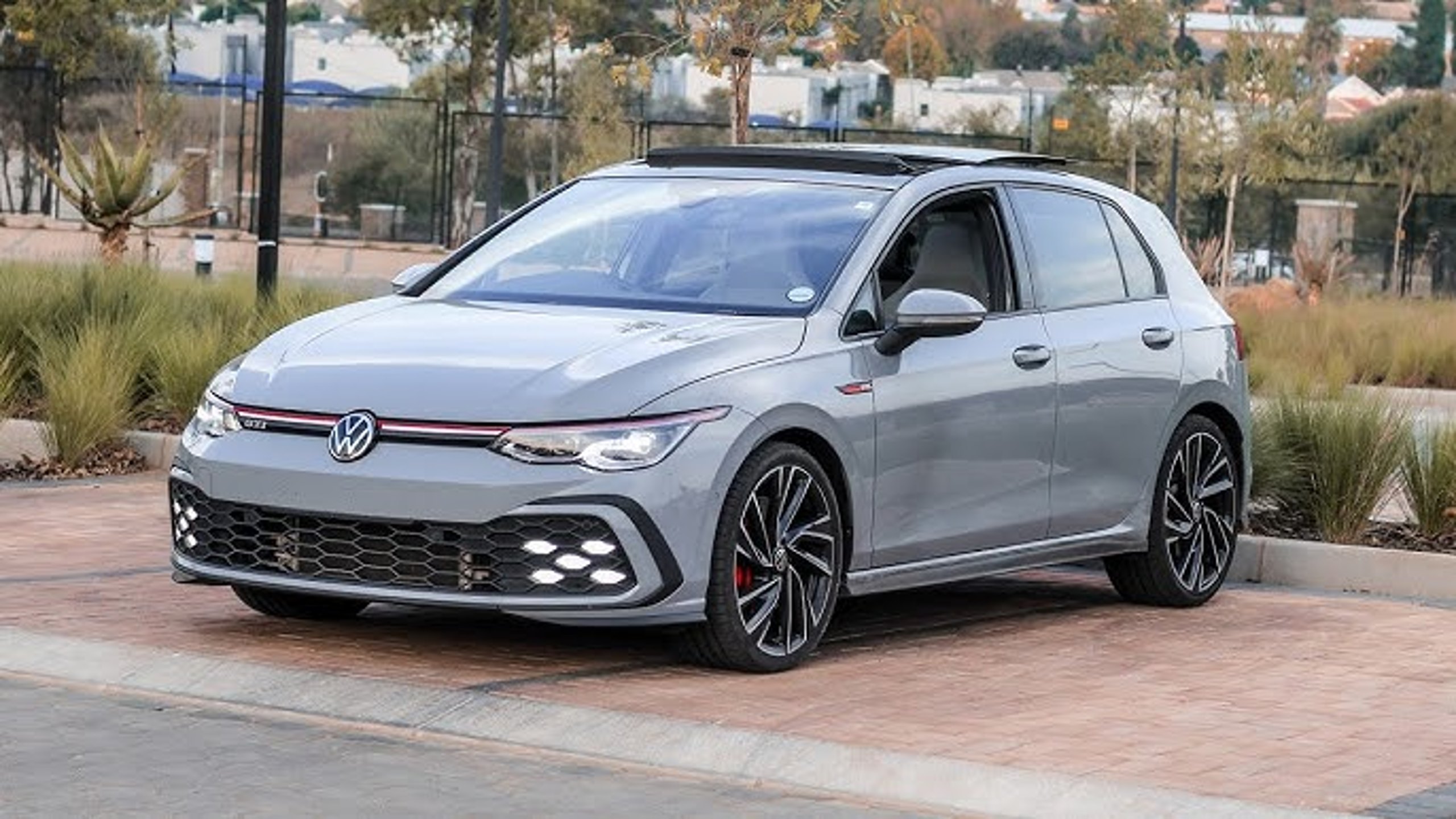
- Test vehicle: VW Golf 8 GTI, model year 2021, 245 hp, gasoline engine
- Route: 60% highway, 30% rural roads, 10% city
- Daily mileage: Average 95 km
- Measurement method: Onboard computer + manual fuel receipt documentation
- Baseline consumption (15 days without device): 9.1 liters per 100 km
- Test duration SynGas: 30 days of active operation
- Witness: Michael Branson, master mechanic, New York
Before the test, I documented my baseline consumption over 15 days without the device: 9.1 liters per 100 km. This is the reference value against which SynGas was measured.
The test result: SynGas
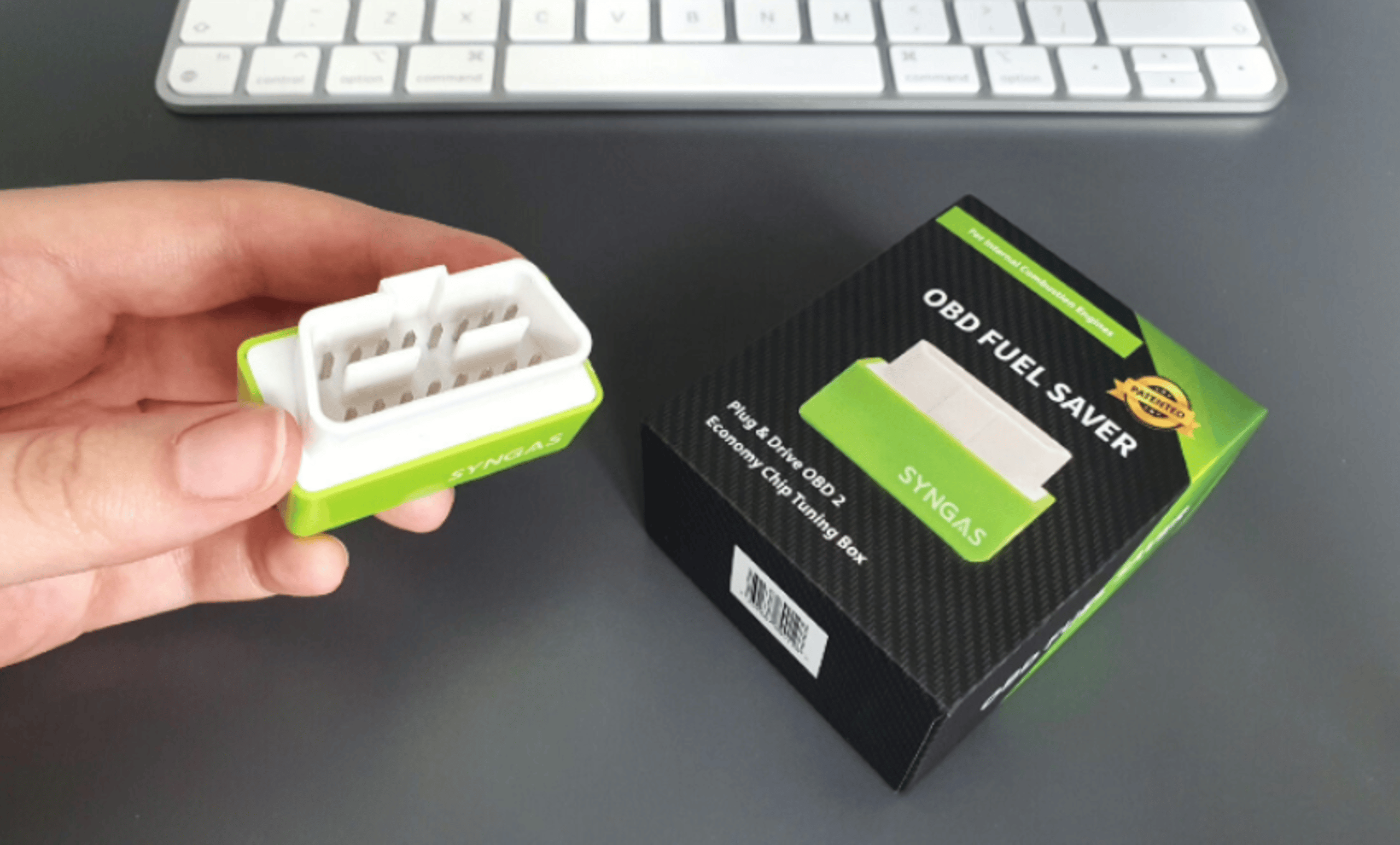
| Result | Base value | With SynGas | Change |
|---|---|---|---|
| consumption | 2.40 gal/100 km | 1.27 gal/100 km | –47.3% (almost halved) |
I’ll say it directly: When I evaluated the first numbers after 10 days, I initially thought it was a measurement error.
My onboard computer showed 4.8 liters per 100 km. I reset the onboard computer and measured for another 5 days. Result: 4.9 liters. Then I called Michael Brandt — he came by, inspected the device, and reviewed all my documentation.
"I have been a master mechanic for 24 years and have never seen anything like this. The reduction in fuel consumption is real and measurable — I personally read the onboard computer data and checked the fuel receipts. What surprised me most: the engine runs more smoothly, and the torque feels noticeably stronger. This is not a placebo effect."
— Michael Branson, Master Mechanic, New York/cite>Almost halved fuel consumption means that in my driving profile: instead of paying €310 per month for fuel, I now pay about €163. That’s €147 in savings — every month. The device paid for itself after the second refueling.
My personal savings after 30 days:
| Before | With SynGas | Difference | |
|---|---|---|---|
| Fuel consumption | 2.40 gal/100 km | 1.27 gal/100 km | – 1.13 gal |
| Monthly fuel cost | approx. $310 | approx. $163 | – $147 |
| Refueling stops / month | 6–7x | 3–4x | Halved |
| Annual savings | — | — | approx. $1,764 |
Why SynGas is so powerful
After the test, I investigated exactly why the results were so dramatic. The answer lies in fundamentally different technology compared to simple OBD2 plug-in devices.
Most low-cost chips send a generic signal to the ECU — a simple "be more fuel-efficient" request. SynGas reads ECU data in real time and actually optimizes three key parameters:
- Injection timing & fuel quantity: SynGas calculates the optimal fuel amount for each cylinder based on current load, temperature, and air mass — not on generic manufacturer values.
- Ignition timing: The moment the spark is triggered directly affects combustion efficiency. SynGas shifts it to the physically optimal window.
- Boost pressure control: In turbocharged engines, boost pressure determines how much air-fuel mixture is burned. SynGas optimizes this ratio in real time and continuously.
"Normal chips tell the engine to be more efficient. SynGas tells it how." — Michael Branson, Master Mechanic
How SynGas works — explained simply
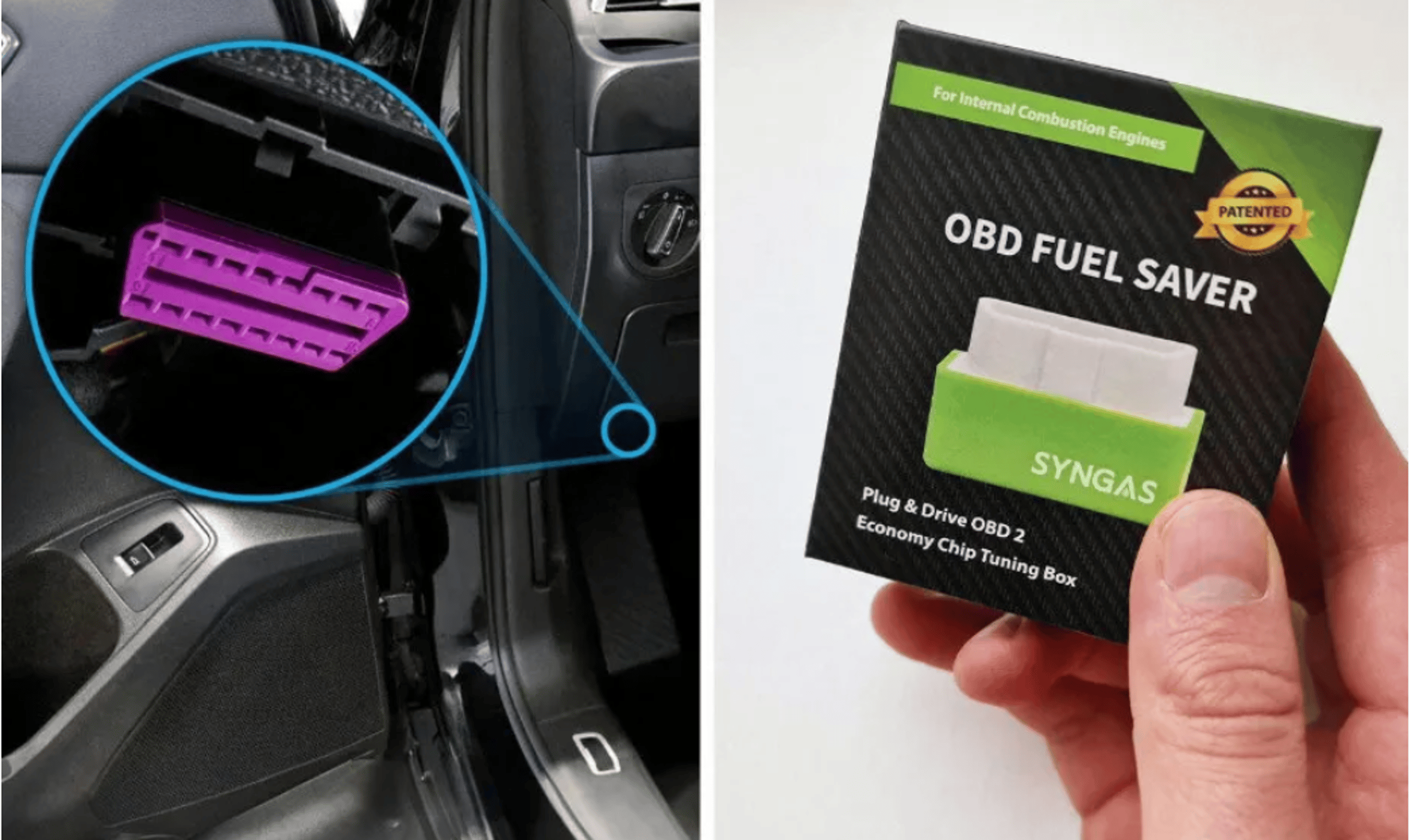
The device is plugged into the OBD2 port — the standardized diagnostic connector found in every car built from 1996 onward (under the steering wheel, directly below the dashboard). No tools, no workshop, 30 seconds.
- 1Plug in: Insert SynGas into the OBD2 port under the steering wheel. Done — no tools, no mechanic needed.
- 2Synchronize: Turn the ignition on for 30 seconds. The chip reads the current ECU data.
- 3Optimize: SynGas adjusts injection timing, boost pressure, and ignition timing to your driving style — in real time.
- 4Savings: After approx. 150–200 km, your vehicle is fully calibrated. From then on, maximum savings on every kilometer.
Why is this necessary? Every manufacturer programs the ECU conservatively — for the worst-case scenario: low-quality fuel, extreme temperatures, high altitude. As a result, in everyday driving, your engine operates far below its efficiency optimum. SynGas corrects exactly this — legally, reversibly, and without affecting the warranty.
My personal conclusion after 30 days
I was a skeptic. I am still a critical journalist. But the numbers speak for themselves: SynGas has almost halved my fuel consumption — documented, re-measured, and confirmed by a master mechanic.
What surprised me most: the device costs less than many competing products, yet delivers the strongest results I have ever seen in this segment. With current fuel prices, it paid for itself after the second refueling.
My recommendation: anyone driving more than 50 km per week should test this device for at least 30 days. The risk is zero — there is a full money-back guarantee.
Where can you buy SynGas? (Important Notice)
After this test report was published, hundreds of readers asked us where SynGas can be purchased. The answer is more complicated than expected.
- Not available on Amazon SynGas is not listed on Amazon and will not be. The manufacturer has deliberately avoided marketplaces to prevent counterfeits and control pricing.
- Completely sold out in retail stores In the few shops where SynGas was briefly available, it sold out within days after the viral test report. Restocking in retail stores is not planned in the near future.
- Only available on a few authorized websites — including this one The manufacturer supplies exclusively authorized online retailers. This page is one of them. The product is currently still available here — we cannot guarantee how long stock will last.
Our advice: Anyone who wants to try SynGas should not wait. With a 30-day money-back guarantee, there is no financial risk. And with current fuel prices, every month without SynGas is money you could have saved.
- Compatible with all vehicles from model year 1996 onward — gasoline, diesel & hybrid
- Installation in 30 seconds — no tools, no mechanic needed
- No permanent modifications — vehicle warranty remains fully intact
- 30-day money-back guarantee — no risk, no questions asked
- Over 11,000 verified customers in the DACH region
- Payback after just 2–3 refueling cycles
What Buyers Are Saying About SynGas
Since the publication of this test report, over 340 readers have contacted us. Here are the responses — unedited, exactly as we received them: